By Jeremy Patton
I do not give cave locations.
Sloans Valley Cave is located in Pulaski County, Kentucky.
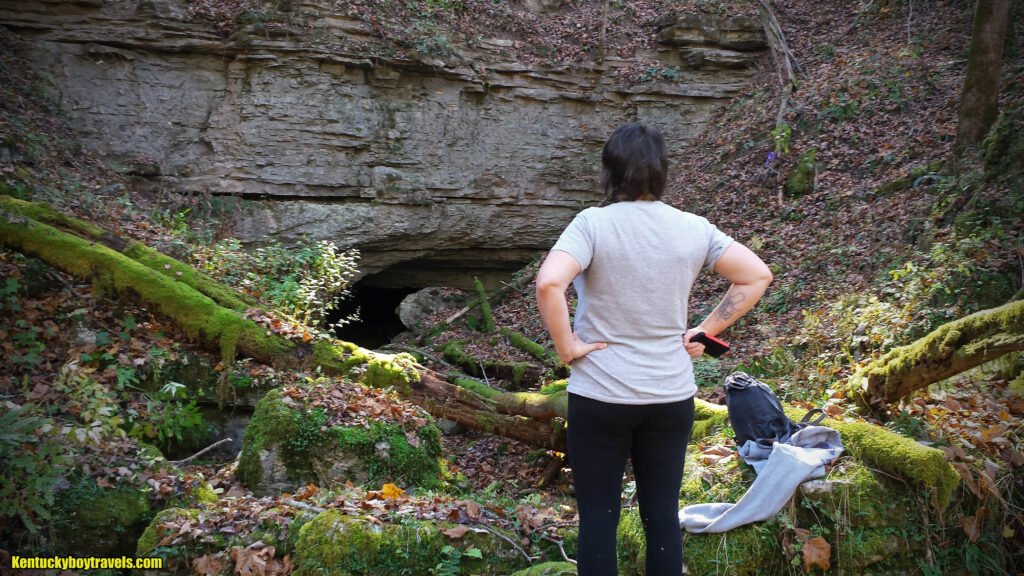
Delania and I found the Minton Hollow entrance on 11/10/16. We had searched for it on and off for about a year. A tip from a local landowner (who shall remain anonymous) helped us. Thank you.
The Sloans Valley cave system has a grim reputation. Numerous cavers have been trapped, injured or killed within its approximately 27 miles of passages. The Minton Hollow area, however, seemed relatively safe.
We climbed over a few mossy boulders then entered a large entrance tucked away in a forest hollow; the passage was high and spacious. We soon found a gated room designated as a bat sanctuary. An interpretive sign stated:
“Help Protect Rare Bats”
“The short, dead end passage behind this gate is the winter home of rare bats, protected by the Endangered Species Act.”
“Once, about 30,000 Indiana Bats hibernated here in winter! Today there are only about 100, and the species is federally listed as endangered.”
“Human disturbance is believed to be a major cause of the drastic decline in numbers of bats hibernating in this cave passage. If even one visitor passes under a cluster of hibernating Indiana Bats, the entire group may awaken and use up enough body fat to have kept each bat alive for as long as 30 days of hibernation. Since there are no insects around during winter, the bats can’t eat again to make up for the lost fat, and may starve to death.”
“Please do not build campfires in or near the cave entrance. Air currents may draw the smoke into the cave and make it difficult for both bats and cave visitors to breathe.”
“The enormous appetite for insects that bats have is a good reason for protecting them to keep them around. Think of how many more insect pests there would be without bats to help control their numbers.”
“With the help of this gate, the bats hibernating here may be able to begin recovering from decline. This gate will be closed from October through April of each year, and will be open again in late spring after the bats emerge from hibernation.”
“You can help protect the bats by respecting this seasonal gate closure and enjoying other parts of this extensive cave system during winter.”
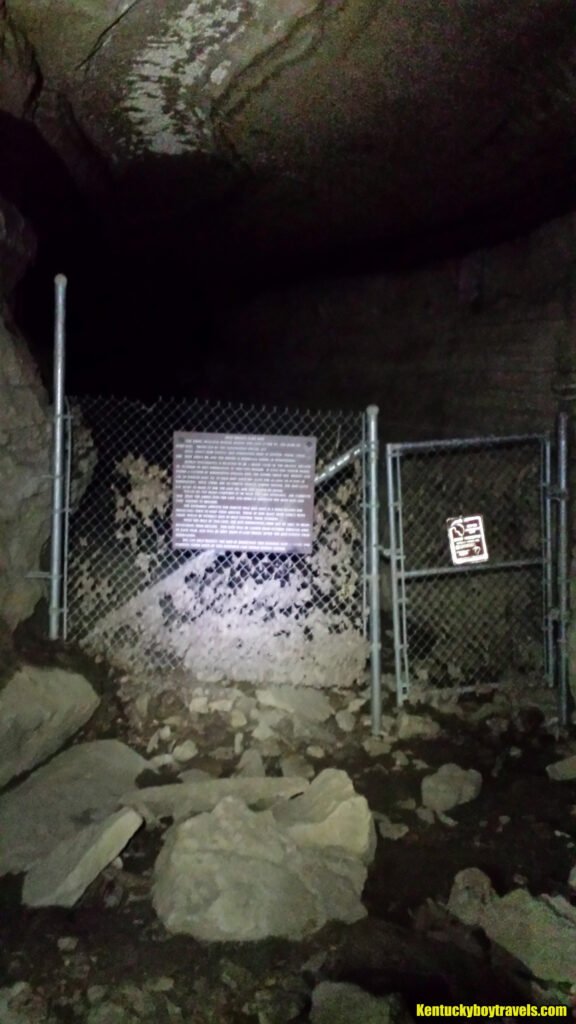
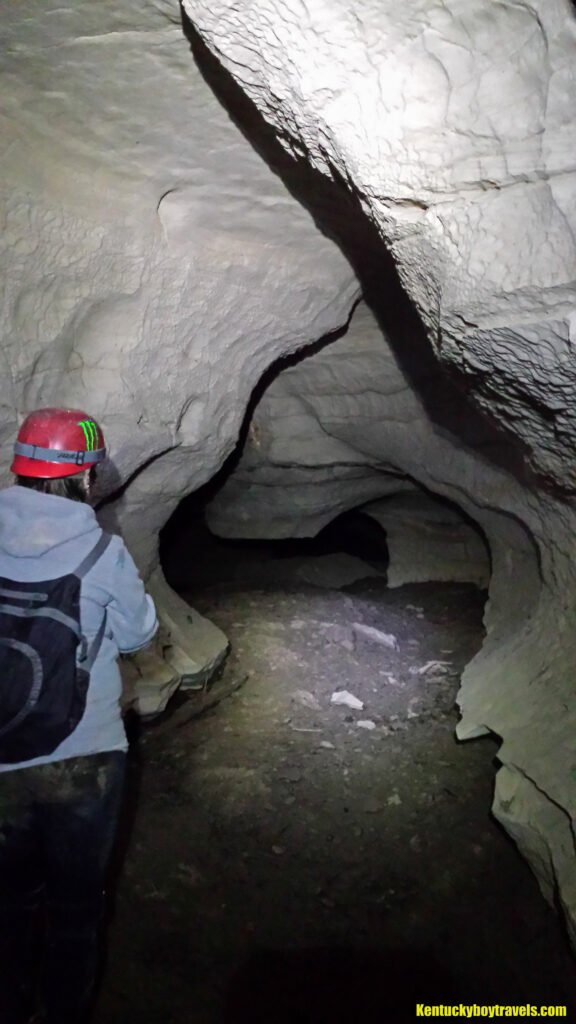
We tip-toed past the enclosure and continued through the main passage where we found bats in other parts of the cave, sometimes clustered on the high ceiling. We moved silently and avoided shining our lights on them.
The main passage snaked quite far then circled back to its starting point. Most of the side tunnels that branched off from it dead-ended. You would need to try hard to get lost. There were a few duck-unders that we left unexplored.
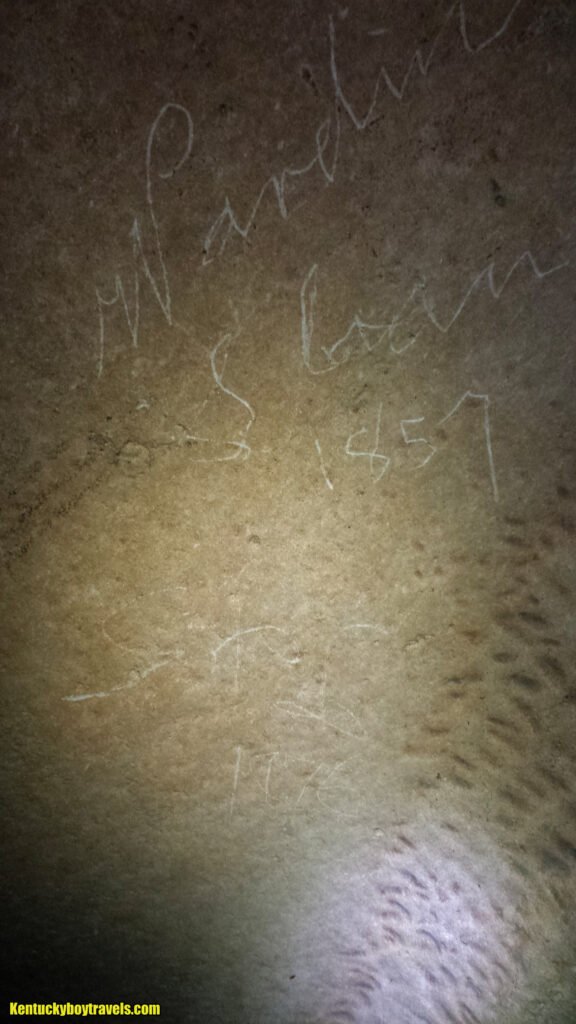
We discovered a faint carving in an inconspicuous area. The old-style cursive was difficult to decipher, but the dates “1857,” “1876” and the surname “Sloan” were legible. If the inscriptions were authentic, they were the oldest that I had ever found. The surname “Sloan” was significant because the cave system and surrounding region are known as Sloans Valley.
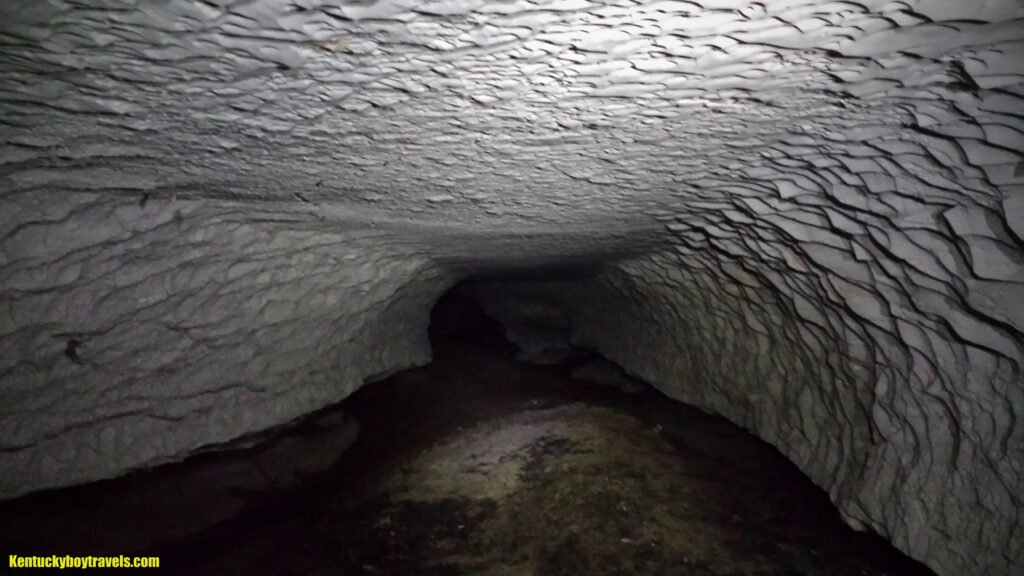
We found evidence of flooding all around us. Mud, sticks and logs were lodged in crevices in many places, including the ceiling.
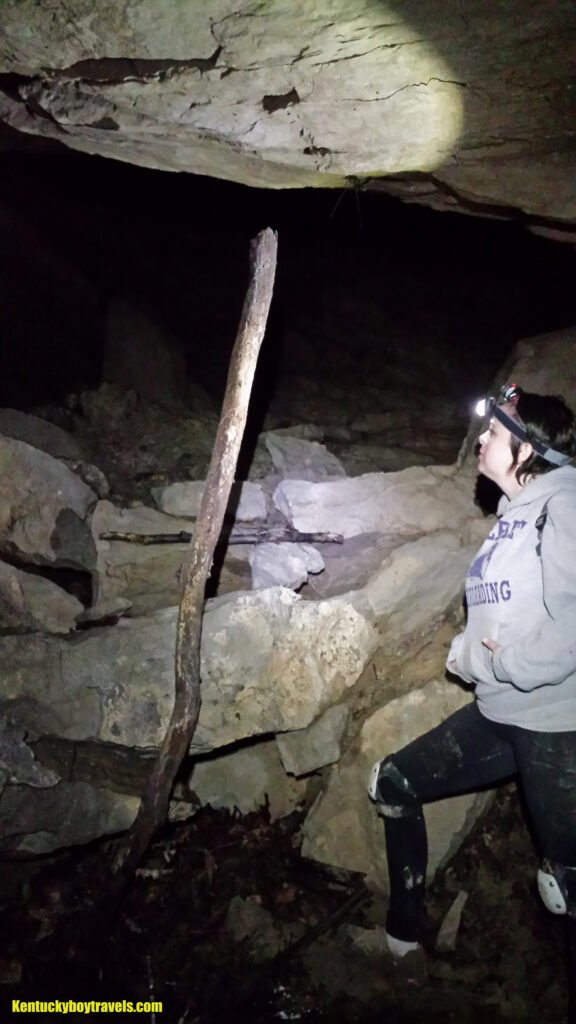
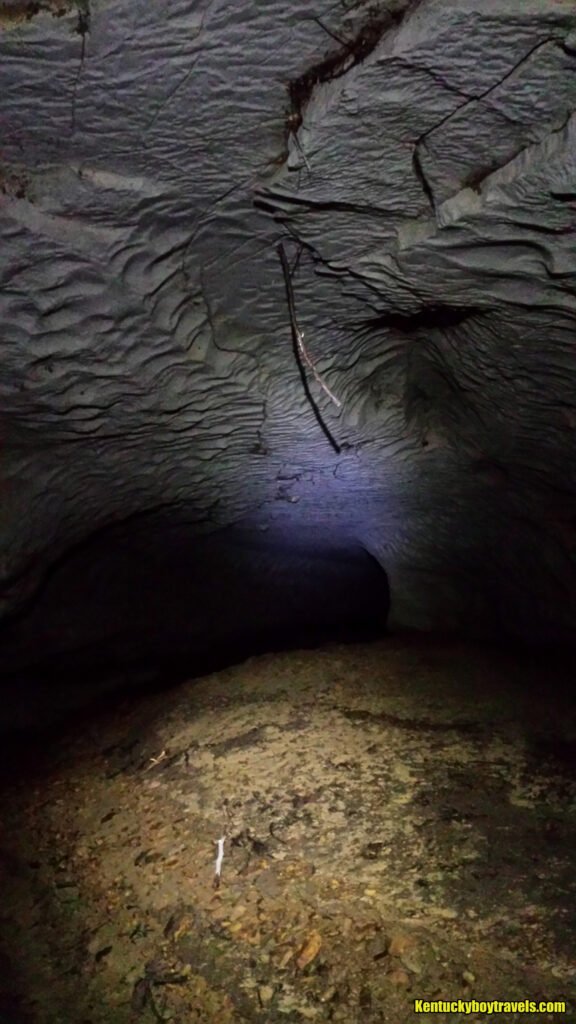
This cave, like most in Pulaski County, is prone to flooding. The water level of Lake Cumberland could also inundate some passages near Minton Hollow, but I cannot confirm that until I return during wet weather (it was around 695 feet MSL on 11/10/16).
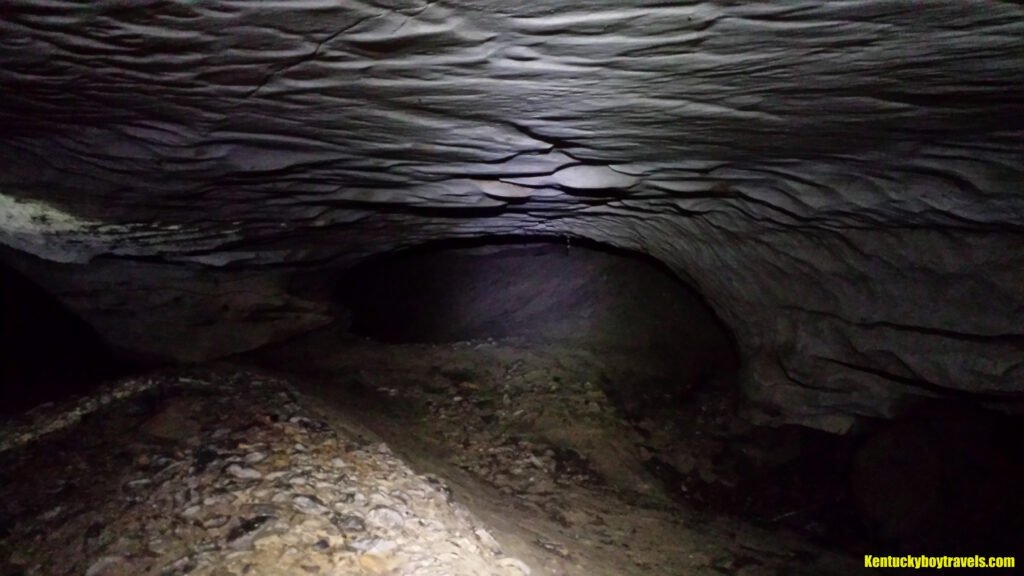
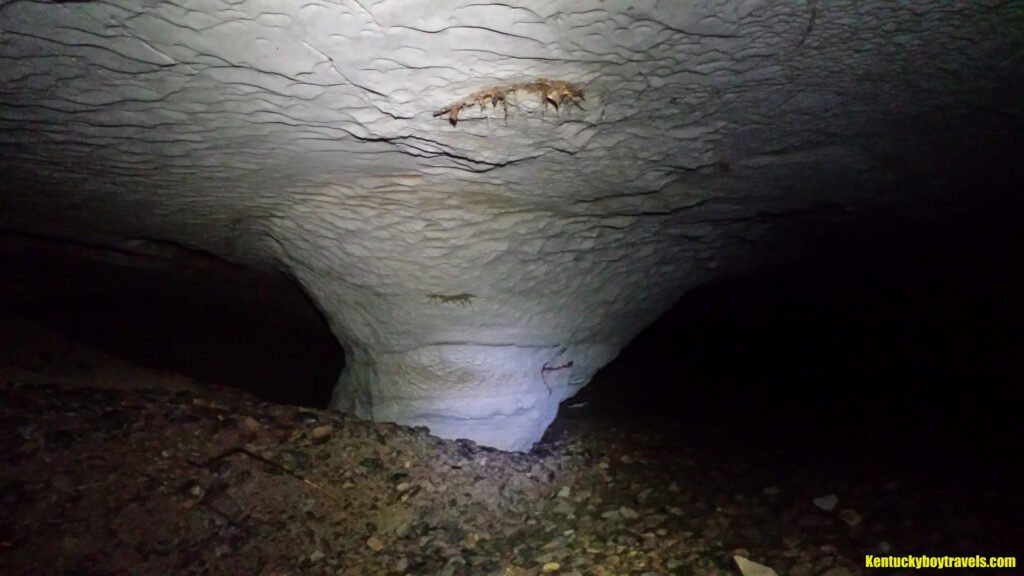
A large natural arch resided in a lower tunnel were water commonly flowed. We followed this tunnel until the ceiling lowered and the walls closed in. It looked as though it continued, but that would have required stooping and crawling. We decided to turn back due to time constraints.
On our way out, we paused at the bat enclosure and turned off our lights. We could hear a multitude of bats chirping away. Perhaps they were holding a conference? Their calls were alluring, like that of birds, but more mysterious. We left their chatter behind and wished them well in their recovery.
Added 11/14/16 – 11/16/16