By Jeremy Patton
I used to think that cave safety is common sense, but I now realize that even smart people can die underground. If you have never explored caves, you are probably not aware of all the dangers.
Recent tragedies have motivated me to write this article. I have completed more than 100 caving trips without injury. Tragedies can be prevented by following basic safety rules.
Inform a family member of the cave’s location and when you expect to return. Cell phones do not work underground and no one will hear your cries for help.
Go with at least three people. If an injury happens, one person can get help while the other remains with the victim.
Go with an experienced caver who can help prevent rookie mistakes.
Take three waterproof light sources with back-up batteries. Without light, you cannot even see your hand in front of your face.
Take a first-aid kit with emergency blanket and know how to use it. Also take snacks and water.
Wear a helmet. Knee and elbow pads are also recommended.
Most caves are made of wet limestone that is extremely slick, so travel using four points of contact to increase your balance. Butt-scooting is also effective. Take your time. Rushing will cause you to make mistakes.
Do not attempt vertical climbing. If you arrive at a pit that impedes your progress, just turn around. There are plenty of other caves to explore. Falls are probably the number one cause of death.
Cave collapses are rare, but do not monkey around in unstable areas where there is breakdown. You could trigger a slide.
Flooding is a serious threat because many caves have creeks rushing through them. They can be bone-dry, but flash flooding will change that in an instant, trapping or drowning you. Even big caverns can flood to the ceiling. Always check the weather forecast. If it calls for rain, cancel.
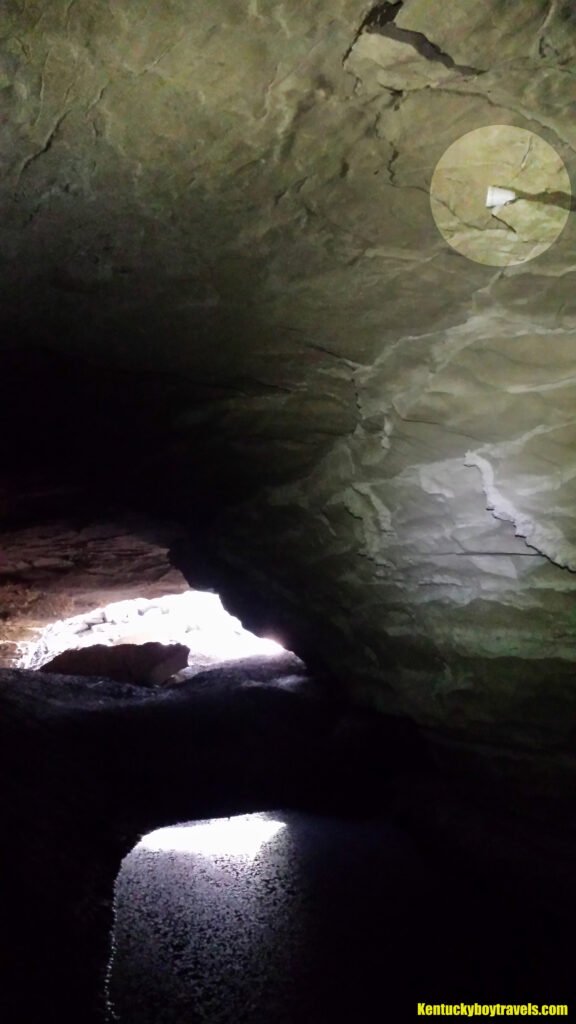
No matter how hot it is outside, you will probably need long sleeves underground. Stay dry to prevent hypothermia. Cave temperatures average about 60 degrees in Kentucky all year. The first time I entered a cave (Mammoth Cave) decades ago, in mid-summer, I was shocked by the cold air billowing from the entrance like an air conditioner.
Watch out for wildlife. My girlfriend and I once stumbled upon a copperhead just inside a cave entrance. We have also found lots of animal tracks deep underground, and even a dead deer. Animals will probably hear you coming, but if you corner one, it might get aggressive. Remember that bats will not bother you unless you bother them.
To avoid getting lost, record every turn that you make. Stacking rocks is a good way to mark your movements.
If you get a headache or feel dizzy, exit the cave. You may have entered a pocket of “bad air” caused by poor circulation or gases. Thankfully I have never experienced this, but I know fellow cavers who have.
Stay out of abandoned mines. They are less stable than natural caves and more likely to contain poisonous gases.
If your gut tells you that a cave is beyond your abilities, leave. When I encounter a sketchy situation, I ask myself “if I continue here, will I risk my life?” If the answer is yes, I turn around, and no amount of peer pressure will change my mind.
Added 7/9/18 – Updated 8/1/26