By Jeremy Patton
On 12/9/15, I was hiking on Ned Branch Trail between Rockcastle Campground and the mouth of Ned Branch, in London, Kentucky. I spotted a large, black object in the early morning shadows, about 50 yards ahead. Peering through the leafless trees, I examined it for quite a while, then it moved.
The bear had not yet detected me, so I slowly pulled out my camera and began taking photos. After about a minute, he snapped his head toward me then my heart pounded. We stared at each other, motionless, for what seemed like an eternity.
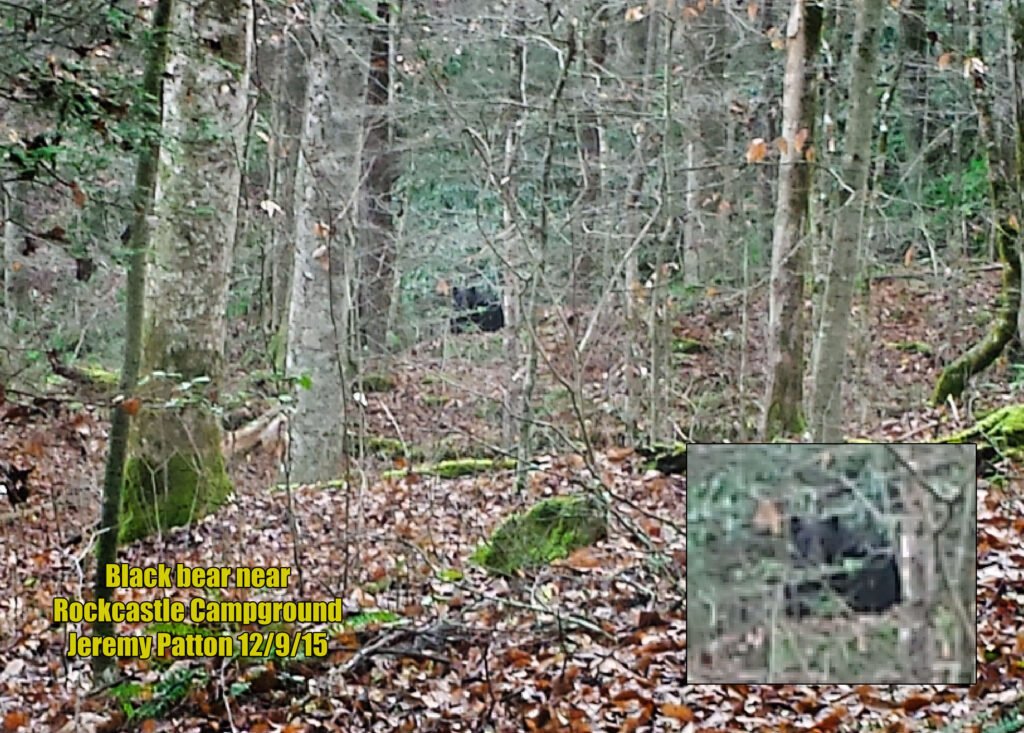
I backed away slowly. I did not want a confrontation with the big guy, so I hoped that we would go our separate ways.
That is exactly what happened. He turned around and lumbered into the brush, heading toward the river. I lingered for a while, giving him time to create distance. I cautiously continued along the trail and clapped at regular intervals to make my presence known. From that moment on, every shadow, every noise, was a bear.
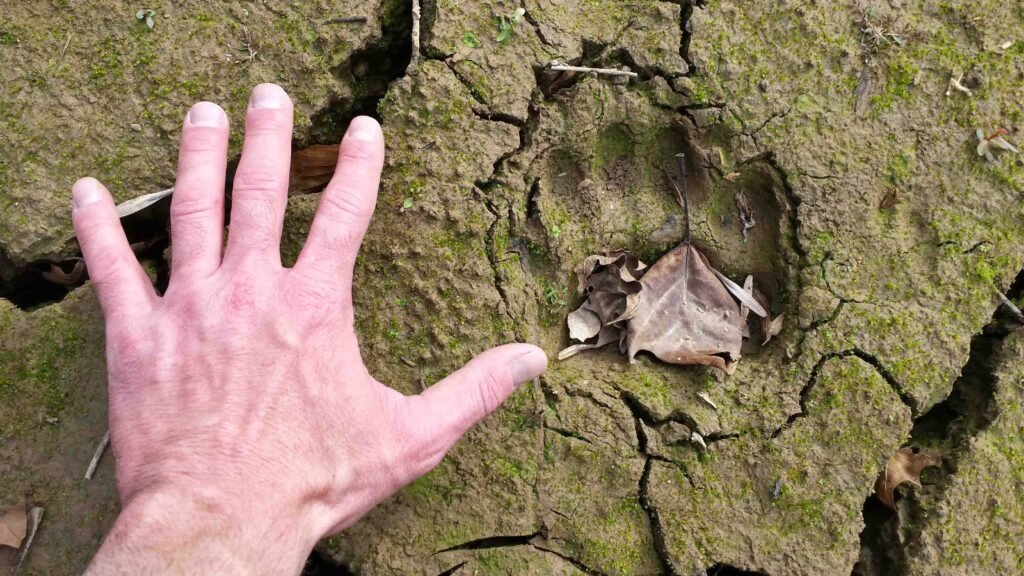
Discovering that I was not the top predator in the forest was not a complete surprise. A few weeks earlier, I found bear tracks in the mud near the Rockcastle River. I wondered if this bear was lonely or had a family. I also wondered where he made his home because I did not want to disturb him.
I was happy to find him near Rockcastle Campground because few people visit there, especially during the colder months. The fewer encounters that bears have with humans, the better. Unfortunately, there are private residences in the region and some people have been feeding the bears.
Once bears lose their fear of humans and associate them with food, they become dangerous. Some folks believe that they are helping bears when they feed them, but they are actually killing them. When bears become a nuisance, officials sometimes must put them down.
Added 12/30/15 – Updated 8/2/26